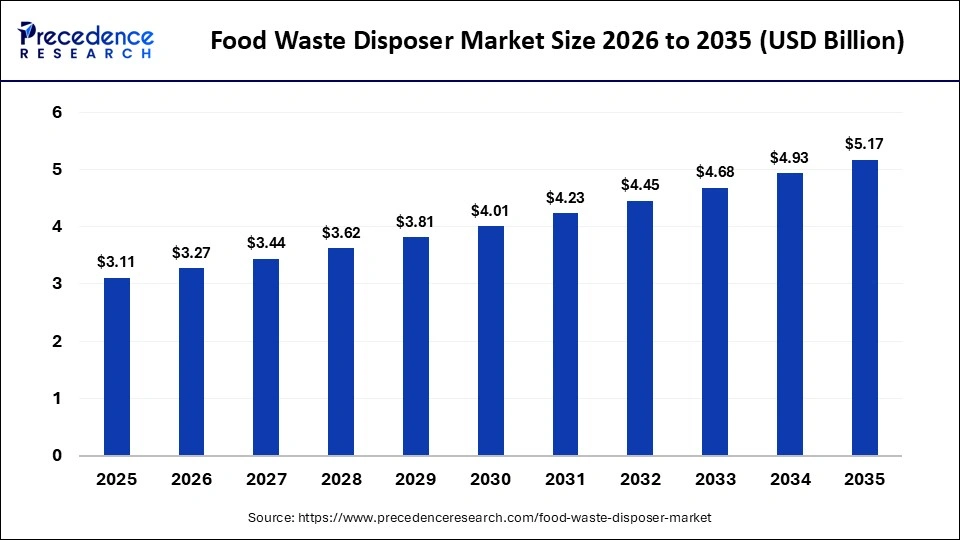
For example, Mordor Intelligence estimates the market at USD 3.71 billion in 2026, reaching USD 4.89 billion by 2031, representing a 5.68% CAGR. Its data also indicates that North America accounted for the largest regional share in 2025, while Asia-Pacific is expected to grow faster.
2. Key Market Drivers
Growing environmental awareness
Governments and businesses are increasingly looking for ways to divert organic waste from landfills and improve resource recovery. Food-waste regulations and landfill-diversion policies are supporting demand for waste-treatment technologies.
Urbanization and smaller living spaces
Urban households, apartments, hotels and restaurants increasingly need compact solutions that can reduce food waste at the source.
Convenience
Consumers and commercial kitchens are looking for automated solutions that reduce manual waste handling, odor and storage requirements.
Commercial demand
Commercial facilities are an important market. Mordor estimates that commercial facilities represented 74.1% of market share in 2025, although its segmentation includes a broad range of food-waste disposal systems.
3. Regional Prospects
North America
North America remains a major established market, with high household penetration in some areas and strong demand for kitchen waste-management appliances.
Europe
Europe’s growth is increasingly connected with circular-economy policies, organic-waste diversion, and stricter waste-management requirements. Some market forecasts identify Europe as a relatively fast-growing region over the coming years.
Asia-Pacific
Asia-Pacific presents significant long-term potential because of rapid urbanization, growing food-service industries and increasing attention to food-waste management. Mordor estimates an approximately 7.05% CAGR for the region through 2031.
4. Technology Trends
The market is moving beyond basic grinding machines toward:
- Lower-noise operation
- Higher grinding efficiency
- Anti-jam systems
- Energy-efficient motors
- Corrosion-resistant components
- Smart/IoT monitoring
- Higher-capacity commercial systems
- Integrated food-waste treatment solutions
Connected, more energy-efficient disposer technologies are emerging trends.
5. Market Prospects
The overall outlook is continued moderate growth rather than explosive expansion. Different research firms project the market to reach approximately USD 4.7–5.4 billion by 2032, depending on the products included in their definition.
For companies in the food waste recycling equipment industry, an important opportunity is the shift from simply grinding food waste toward treating and recovering food waste. A disposer mainly reduces particle size and sends the material into a wastewater system, whereas composters, dehydrators and other on-site treatment systems can process food waste directly at the source.
This creates potential differentiation for products positioned around food waste reduction + odor control + on-site treatment + compost/fertilizer production, particularly for restaurants, hotels, schools, supermarkets and other commercial facilities.
6. Outlook for Creeks Composter
For Creeks Composter, the most relevant market is not necessarily the traditional under-sink disposer market. A stronger positioning could be the broader commercial food waste treatment and recycling market, where customers need to reduce food waste volume, minimize transportation/disposal costs and convert organic waste into a useful output.

 CR-1
CR-1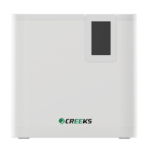 CR-2
CR-2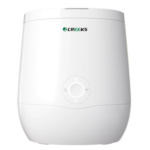 CR-3
CR-3 CR-5
CR-5 CR-10
CR-10 CR-30
CR-30 CR-50
CR-50 CR-100
 CR-200
 CR-300
 CR-500
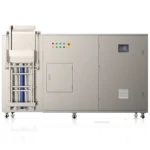 CR-1000
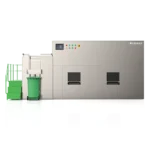 CR-2000
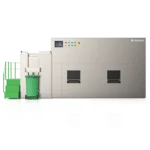 CR-3000
 CR-5000
 10Tons
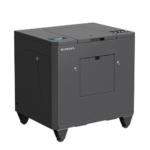 Food Waste Dryer
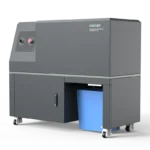 Food Waste Shredder
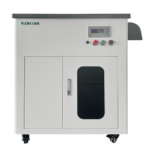 Waste Reduction Machine