Food waste is commonly valorized through aerobic composting, yet the responses of water-soluble organic carbon (WSOC) across molecular-weight (MW) fractions remain insufficiently resolved. This study aimed to quantify how distinct composting strategies regulate the distribution and compositional evolution of WSOC and identify the key physicochemical drivers. Food waste was treated by 30-day conventional composting (CK), 15-day phased inoculation (JJ; 2% (w/w) antioxidative consortium dominated by Bacillus/Pseudomonas followed by 2% (w/w) thermophilic cellulolytic consortium enriched in Geobacillus/Paenibacillus when the temperature reached 50 °C), and 24-h rapid thermophilic composting (RC; 2% (w/w) inoculation with a 24-h moist-heat pretreatment). RC yielded a small molecular weight organic carbon (SMOC)-rich product with low aromaticity, with MW < 5 kDa accounting for 68.21% (MW < 500 Da: 28.50%). JJ preferentially enriched more oxidized, fulvic-like/carboxyl-rich organics, increasing the fulvic-like contribution from 15.97% to 35.40% and raising the HMOC/SMOC to 2.72:1. CK showed the strongest humification, with MW > 5 kDa reaching 65.56% and humic-like Region V increasing from 26.25% to 66.36%. pH was the primary predictor of MW (day 6: CK 3.9; JJ 4.9; final ~8.8), while temperature jointly governed humic-like formation in RC.
1. Introduction
Driven by global economic development and rising consumption levels, the generation of municipal solid waste, particularly food waste, has increased rapidly worldwide. In 2022, approximately 1.02 billion metric tons of food waste were generated globally, contributing substantially to greenhouse gas emissions. Aerobic composting offers an effective pathway to stabilize food waste and transform labile organics into more humified and agronomically beneficial forms.
Nevertheless, the transformation of organic carbon fractions, including changes in molecular weight distribution and compositional features during composting, remains insufficiently characterized, which constrains process optimization and product quality control. Owing to its high moisture content and abundant organic matter, food waste can be considered a promising feedstock for energy recovery or fertilizer production. Consequently, efficient valorization of food waste is regarded as a critical challenge for environmental management and sustainable development.
Among the various treatment strategies, aerobic composting is widely employed because of its well-established technology and the agronomic value of the resulting products. During composting, organic matter is biochemically transformed into stabilized humic substances, thereby mitigating environmental risks while recycling nutrients. Nonetheless, conventional composting is often constrained by a slow startup and extended processing cycles, particularly during the decomposition of recalcitrant components such as lignin. Inoculation with exogenous microbial consortia has been used to accelerate humification, enhance organic matter conversion, and improve compost stability.
Molecular weight is a key determinant of the bioavailability and functional role of organic carbon in environmental processes. Organic carbon with a molecular weight below 600 Da is classified as small molecular weight organic carbon (SMOC), which is readily transported into microbial cells and can directly participate in metabolic processes, thereby playing a pivotal role in nutrient cycling. In contrast, high molecular weight organic carbon (HMOC, MW > 5 kDa), including lignin and humic substances, is generally more recalcitrant and must be enzymatically degraded to become bioavailable. During humification, SMOC is predominantly consumed in the early stages, whereas HMOC gradually accumulates through condensation and aromatization, ultimately yielding stable humic substances. This molecular weight-based perspective is essential to understanding humification mechanisms and optimizing the valorization of organic waste.
Biological treatments can modulate the dynamics of organic carbon fractions and thereby influence humification outcomes. Inoculation with exogenous microbial consortia has been shown to promote organic matter degradation, increase SMOC formation, and accelerate the synthesis of humic substances, thereby shortening the composting cycle. The humification process can be conceptualized as three interconnected pathways: SMOC is either directly assimilated by microorganisms, converted via condensation into humic precursors, or mineralized into inorganic products (CO2, H2O, NH3). Accordingly, the interconversion between SMOC and HMOC can be directly regulated by biological treatments, ultimately determining the composition, molecular characteristics, and quality of the resulting humic substances.
The essence of composting lies in the mineralization and structural evolution of water-soluble organic matter (WSOM), which is highly reactive and serves as the primary interface for microbial metabolism. WSOM comprises a heterogeneous mixture of SMOC (e.g., amino acids, monosaccharides) and HMOC (e.g., humic substances, proteins, polysaccharides, and lignin) and is characterized by diverse functional groups (e.g., carboxyl, phenolic, carbonyl, and amine). Variations in WSOM composition can influence microbial metabolic pathways and may drive shifts in microbial community structure and function. Elucidating the dynamic changes and structural succession of organic carbon fractions in WSOM is therefore crucial for understanding the humification mechanisms and enhancing the efficiency of organic waste valorization. Spectroscopic, chromatographic, mass spectrometric, electron microscopic, and electrochemical techniques have been widely applied, and spectroscopic approaches have been recognized as particularly promising for characterizing organic carbon fractions, functional groups, and structural evolution.
Conventional soil conditioners are typically designed to improve soil aggregate structure and thus primarily rely on HMOC, while the role of SMOC in stimulating microbial metabolism and promoting nutrient cycling has received limited attention. Motivated by this conceptual gap, the present study does not claim soil-amendment performance but instead establishes a fraction-resolved characterization framework to quantify how different composting strategies reshape WSOM carbon fractions. Specifically, we compare conventional composting (CK), phased inoculation (JJ), and a short-cycle thermophilic process (RC) by integrating ultrafiltration-based molecular-weight fractionation with EEM-FRI/PARAFAC, FTIR functional-group profiling, and UV–Vis-derived optical indices. We hypothesize that these strategies will exhibit distinct WSOM transformation trajectories, reflected by differences in MW distribution and spectroscopic/optical signatures and their co-variation with key physicochemical parameters (pH, temperature, OM, and TOC). Standardized compost quality metrics (e.g., nutrients, heavy metals, phytotoxicity) and soil/plant performance endpoints were not assessed here and are therefore identified as priorities for future validation.
2. Materials and Methods
2.1 Sample Collection and Preparation
Food waste samples were collected from local cafeterias and homogenized. Initial characterization included moisture content, total organic carbon (TOC), total nitrogen (TN), and C/N ratio.
2.2 Composting Experiment
Composting was conducted in 50 L insulated reactors under controlled aeration and moisture conditions. Temperature, pH, and moisture content were monitored daily. Samples were collected at key composting stages: initial (day 0), thermophilic (day 5–15), cooling (day 20), and maturation (day 40).
2.3 Fractionation of Organic Carbon
OC was fractionated using ultrafiltration membranes into three molecular weight categories: high (>10 kDa), medium (1–10 kDa), and low (<1 kDa). Each fraction was analyzed for concentration, chemical composition using Fourier-transform infrared spectroscopy (FTIR), and humification degree.
2.4 Data Analysis
Changes in OC fractions over time were statistically analyzed to identify trends and correlations with composting parameters.
3. Results and Discussion
3.1 Dynamics of OC Fractions
High molecular weight carbon decreased significantly during the thermophilic phase, indicating rapid microbial degradation of labile polysaccharides and proteins. Medium molecular weight fractions showed a gradual decrease, contributing to humic substance formation. Low molecular weight carbon initially increased due to the breakdown of larger molecules, but declined during the maturation stage as it was mineralized by microbes.
3.2 Humification and Chemical Composition
FTIR analysis revealed increased aromaticity and functional group complexity in medium and high molecular weight fractions, suggesting their transformation into humic-like substances. The humification index increased steadily, confirming compost stabilization over time.
3.3 Implications for Composting Management
The findings suggest that controlling the balance between molecular weight fractions can optimize microbial activity and humus formation. Strategies such as adjusting aeration and moisture during the thermophilic phase may enhance the transformation of high molecular weight OC into stable humic substances.
4. Conclusion
Organic carbon in food waste compost undergoes significant transformation across different molecular weight fractions. High molecular weight fractions are rapidly degraded, while medium and low molecular weight fractions play critical roles in humification and compost stabilization. Understanding these dynamics can improve composting efficiency and product quality.
 CR-1
CR-1 CR-2
CR-2 CR-3
CR-3 CR-5
CR-5 CR-10
CR-10 CR-30
CR-30 CR-50
CR-50 CR-100
 CR-200
 CR-300
 CR-500
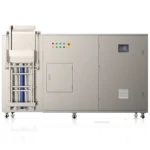 CR-1000
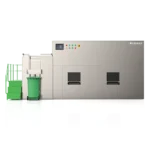 CR-2000
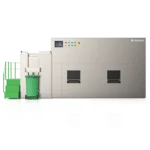 CR-3000
 CR-5000
 10Tons
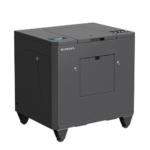 Food Waste Dryer
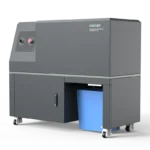 Food Waste Shredder
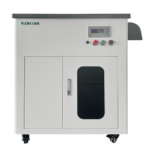 Waste Reduction Machine